
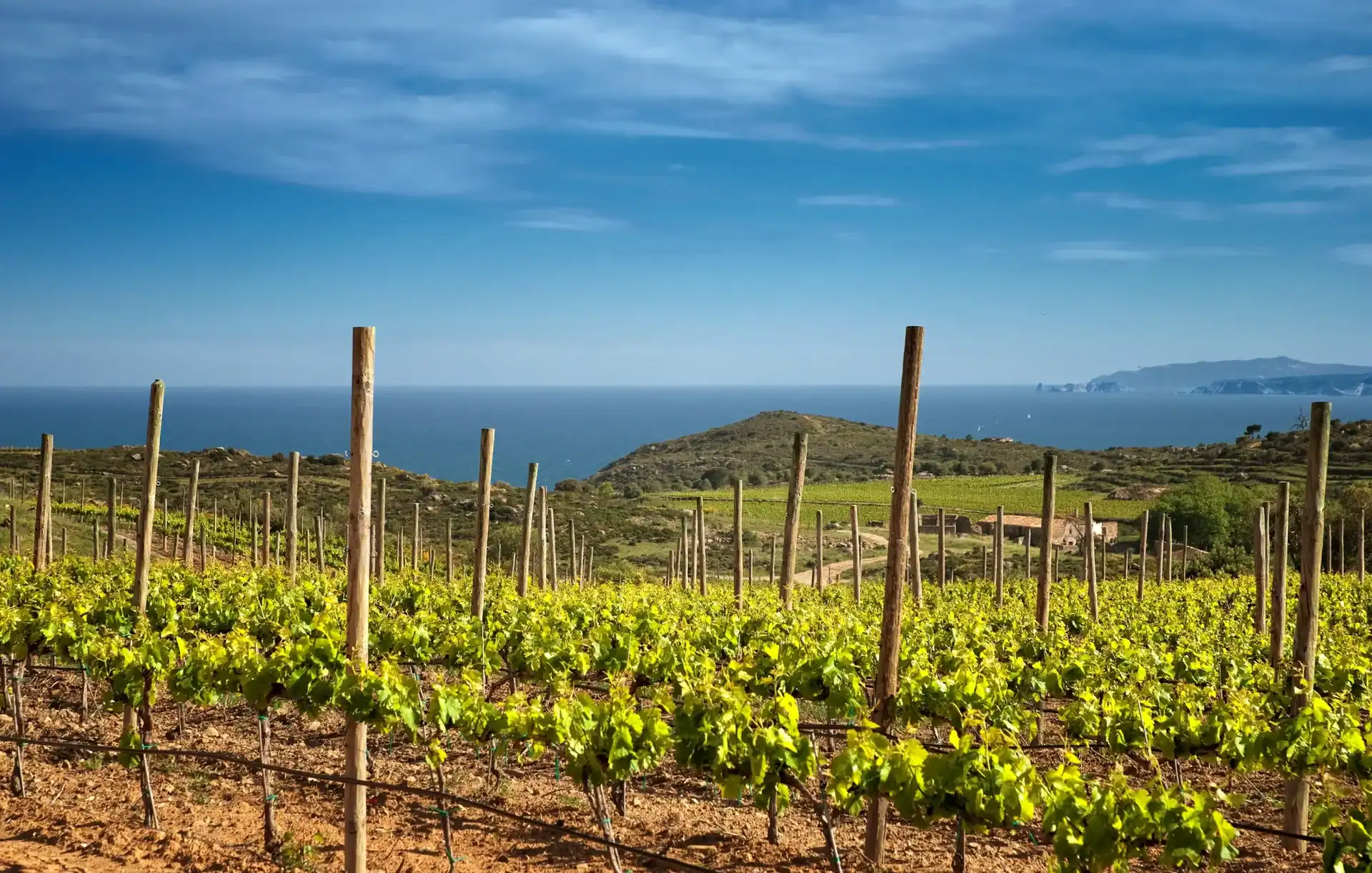
Costa Brava Wine Region
The Greeks were already cultivating wine on the Costa Brava, so the region has a long tradition. The vineyards (vinyas) on the foothills of the Pyrenees give the landscape a particularly charming character. For a time, mainly cheap wine was produced. But the new generation of winemakers put an end to that. They strive for character wines of excellent quality. And that is clearly evident in the taste. Nowadays, top wines are being produced that are internationally recognized. This region offers every opportunity for good wines, due to the mild climate and the necessary lean soil of granite, slate, and sand.
The Wine Route, which begins in Languedoc-Roussillon in France, creeps into Spain via Portbou along the coast and winds further via Bascares, Llança, Port de la Selva, and on to Rosas. Then he heads towards Palau Saverdera, Pau, Villajuïga, Garriguella, Espelt, Rabós, all the way to Sant Climent de Sescebes, where, according to reviewer Parker, the second-best wine in the world is produced. What we ourselves find so characteristic of Northern Spanish wine is that it is very drinkable without food, despite the fact that they are quite heavy wines with a relatively high alcohol content.
The winegrowers are often affiliated with cooperatives that produce the wine for them. However, there are also dozens of family-owned bodegas. You can recognize the bodegas by the colorful tile mosaics on the facades. A suitable way to get acquainted with the wines and the region is a tour of the bodegas with their vinyas. Moreover, there are regular wine and cheese markets in the various villages. You pay a small fee and can then go to the tables to taste. In September, many winemakers are at the “Mostra del Vi de l’Empordà” wine fair on the Ramblas in Figueres. More than 25 bodegas offer their products for tasting here. In the spring, you can visit the “Fira Arrels del Vi” fair in Sant Martí d’Empúries.
The most typical wines are undoubtedly the sparkling Cavas and the Rosats, the cherry-red rosés. Traditionally, sweet dessert wines are also produced. Several houses now make the Spanish counterpart to the French Primeur. The Vi Novell, known in this region, is a young, tasty wine that is available for purchase starting in November.
Places you should definitely visit as a wine lover include:
Peralada
Wine has been produced at the bodega of the Perelada castle for centuries. You can take a tour of the cellar and the vineyard. They produce Cava and red wines, for which they use the local grape varieties Cariñena, Garnacha, Syrah, and Merlot. It is the best-known and largest bodega in the region.
Capmany
With its nine bodegas, Capmany is a true wine village. It is located at the northernmost point of this Spanish wine region. The largest bodega is Grup Oliveda. Wines originating from here include Rigau Ros and Mas Oliveda.
Vilajuïga
The fermentation of the wines takes place here in underground cellars. Winegrowers from the surrounding area supply their grapes to the Empordàlia cooperative. Spring water is also bottled in this village for the region’s restaurants.
Espelt, between Vilajuïga and Pau
Espelt Vitcultors is an innovative winery founded in 2000 by the Espelt wine family. The wine labels were designed by the famous Spanish designer Javier Mariscal. The label for the red wine Sauló depicts a winegrower hard at work in the vineyards, and that is exactly what the Espelt family themselves have primarily done over the past 50 years. They own 200 hectares of vineyards and produce a wide range of quality wines.
Garriguella
At Cooperativa Agrícola Garriguella, you can still see how grapes from winegrowers in the surrounding area are processed in old concrete vats. In addition, they also use new stainless steel equipment.