
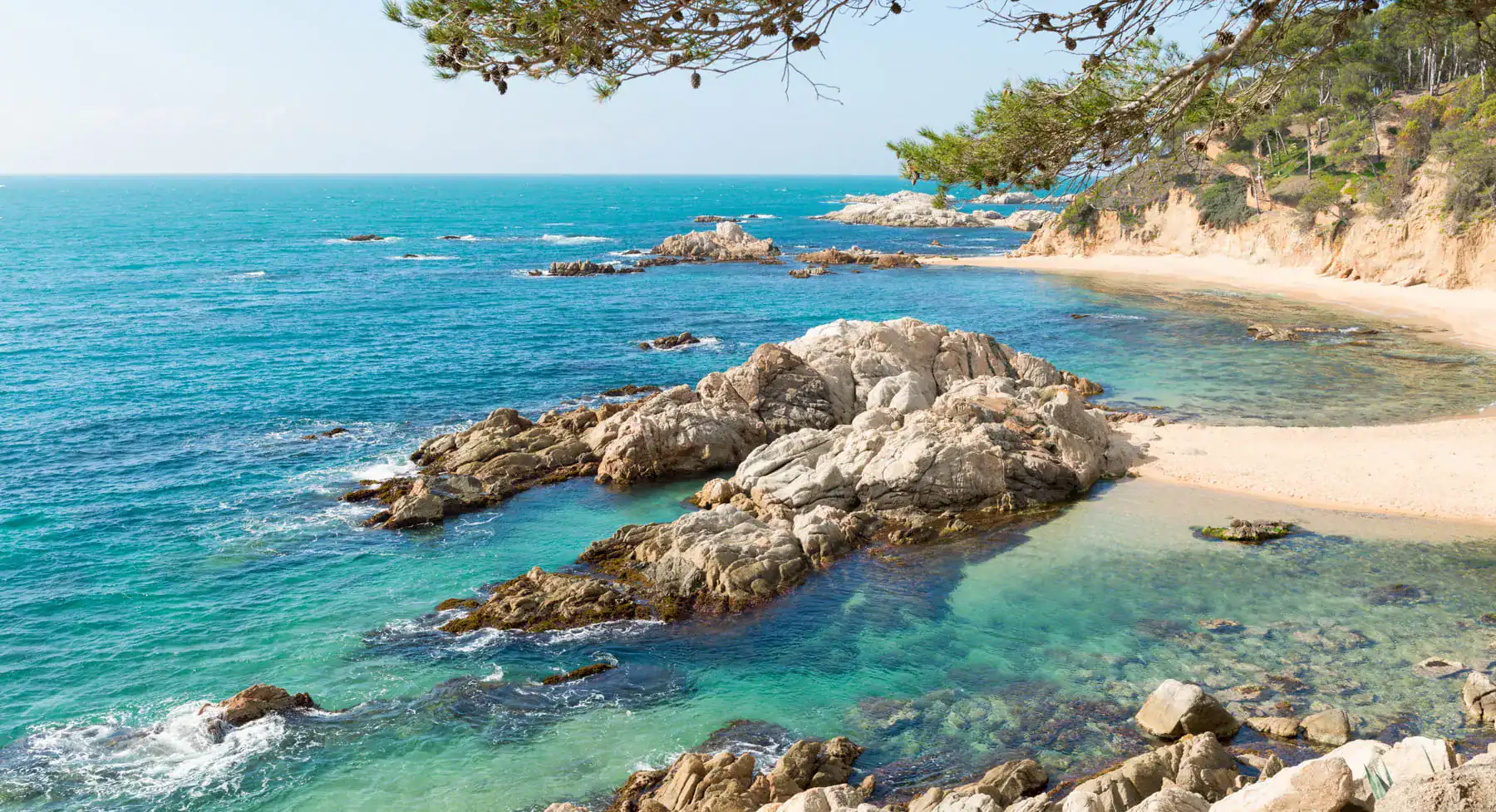
The pure life under the indigo-blue sky
Anyone who has been there will agree. The sun-drenched Costa Brava is a heavenly place on this earth. You discover it when swimming in the surf with a view of the green Pyrenees. You taste it in the restaurants that combine sea and mountains in an exquisite way in their regional dishes. This is a region for all the senses, for enjoyment at a high level.
We enjoy showing our clients around the area and describing the possibilities regarding relaxation, culture, sports, nightlife, and gastronomy. This is how we experience ‘our’ beautiful region in Northeast Spain. Everything you look for in various holiday countries can be found here all in one place. It is not without reason that National Geographic named the Costa Brava the most beautiful holiday destination in 2012.
As a Northern European, you can easily settle in here, because the Costa Brava experiences four seasons that cause the landscape to constantly change. The entire area is easily accessible by plane, train, or car. All roads are well-paved. A blessing for cyclists and motorcyclists.
Unwind in rich nature
Some people associate the Costa Brava only with crowded beaches. We can easily correct that image. Firstly, they are never overcrowded, because we have dozens of them. From wide white sandy beaches to hidden romantic coves. Secondly, there are also beautiful (partially protected) nature reserves that attract visitors from all over the world due to their unique flora and fauna.
Parc Natural Aiguamolls de L’Empordà
A wetland in the river delta of the Muga and the Fluvia, featuring lakes, saltwater lagoons, and polders with dikes and weirs. The park has high ecological value due to its strategic location on the bird migration route between Africa and Northern Europe. As many as 50 special bird species live there. From concealed observation posts, you can see flamingos, storks, egrets, purple swamphens, and bee-eaters, among others. Also keep an eye out for the beautiful butterflies.
Parc Natural del Montgri, les Illes Medes i el Baix Ter
This park is located on the Montgri massif, between the Ter river and the Illes Medes island archipelago. Go hiking in the forests and experience how pure the air is here. Or head to the cliffs on the islands to kayak. This area is also a true paradise for diving enthusiasts.
Video Illes de Medes
Parc Natural Cap de Creus
In this park, the Pyrenees meet the sea, creating a very rugged coastline. It lies just above Cadaqués and consists of still pristine nature known for its wild herbs and many species of lichens. A winding road with views of the various bays leads you to Cap de Creus. Hiking enthusiasts prefer to go up on foot so they can feel accompanied by the birds and inhale the aromatic scents. For example, wild fennel, whose sweet oil is used in licorice and toothpaste.
From the cape, the view over the sea is truly impressive. If you want to surprise your loved one, make sure you are there at sunrise or sunset. Success guaranteed! Part of the park is located in the sea. Ideal for divers looking for octopuses and other interesting marine life among the rocks.
Parc Natural Zona Volcànica de la Garrotxa
This vast nature park is mainly about the 30 volcanoes, each with its own character. Rest assured, we are talking about the shape and vegetation of these sleeping giants. The last eruption was 12,000 years ago. The most popular volcanoes are Santa Margarida because of its large crater of 330 meters, El Croscat in the shape of a horseshoe, and El Montsacopa with its cone shape. The mountain peaks reach well over 1,000 meters and are challenging enough for mountaineers. Because the area is so rugged, it attracts many avid mountain bikers. You can obtain routes and rent bikes in the villages in the area. Additionally, there are nearly 30 marked hiking trails that lead you past plants rarely or never found in the rest of Spain because they require the special fertile soil. The park, with its craters and lava walls, is highly accessible by car, bicycle, and on foot. For safety reasons, it is required to take a guide along at some volcanoes.
Lake Boadella – Darnius
A refuge for Spaniards seeking a break during the season. It is always quiet and relaxed here, as tourists have not really discovered this reservoir yet. The water, with its distinctive turquoise color, is surrounded by a sandy beach and beautiful deciduous forest. The small restaurant by the water features a spacious terrace where you can enjoy food and drinks and take in the view of the mountain cliffs surrounding you. This reservoir supplies the entire region with drinking water.
Sports, sports, and more sports
What stands out in the Costa Brava is the wide range of sporting activities on offer. Swimming, diving, snorkeling, kitesurfing, windsurfing, parasailing, sailing, waterskiing, kayaking, road cycling, mountain biking, golfing, playing minigolf, hiking, skydiving (including indoor in a wind tunnel), mountain climbing, canyoning, paragliding, beach volleyball, horseback riding, pétanque, tennis, go-karting, fitness, and much more.
Villages and Cities
The villages on the Costa Brava are old fishing villages. They are known for their stunning location and lively Mediterranean atmosphere. Further inland lie the tranquil villages where time seems to stand still. We take you to places that made an impression on us.
Port de la Selva
In this authentic fishing village, the white houses are nestled cozily against one another on the hillside. The village lets life unfold naturally and invites you to do the same. Anyone sitting here on the terrace by the water with a cup of espresso can see the colorful fish swimming in the depths. They are living proof that the seawater on the Costa Brava is super pure.
The bay naturally has the perfect shape for a small harbor. Shiny little boats bob endlessly at your feet. Just a little further on lies the beach, which always has room for extra sunbathers. Those seeking a bit more privacy can walk to the small coves further along. Are you out walking anyway? Then go exploring in the pristine nature and be surprised by medieval structures in unexpected places. Tip for water lovers: due to its location relative to the mountains, Puerta de la Selva is the only place in the area where you can surf during the strong mountain wind, the tramontana.
Sant Pere Pescador
A lovely and lively village surrounded by vast fruit orchards. It is the river Fluvia that makes the area so fertile. Many African people work here, amicably sharing the village with the Catalans. If you drive from Sant Pere Pescador to the beach and take the bridge over the river, you will be impressed by the vast and wide beach. You never see anything like it. More than 6 km of sand and dunes.
The chapel in the village dates back to the 17th century. It is a true folk building, intended to invoke the help of Saint Sebastian, who protected against infectious diseases that were heavily spread by mosquitoes in earlier centuries.
Sant Martí d’Empúries
This small but beautiful medieval seaside town was built next to the ruins of the Greek Palaiapolis. It is delightful to stroll along the houses built of cobblestones. Here and there a small boutique surprises you, and around the corner the sweeping view of the sea and the beach unfolds. The entire Gulf of Roses can be seen in the distance. Although the 6 streets and 2 squares might suggest otherwise, Sant Martí d’Empúries has historically always been a place of significance. The Greeks lived there as early as the 4th century BC. Around the year 600, it held an episcopal see. In the 7th century, it was occupied by Muslims, only to be reconquered by Charlemagne in the year 785. Sant Martí d’Empúries is located north of the archaeological site of Empúries, which can be visited. (LINK)
After walking the long path through the dunes and pine forests, you can enjoy an ice cream with your feet in the sand or settle down on the terraces of the main square for delicious tapas (try the artichokes baked in dough!). Those who appreciate style and are looking for the very best should choose Hostalspaempúries (LINK). An inspiring Art Deco hotel with organic cuisine and vegetables from its own garden.
In Casa Forestal, the modernist building next to the church, you can find a museum entirely dedicated to the Empordà region.
Empuriabrava
It has a resemblance to Venice. That is why we are describing Empuriabrava from the water right away. We are cruising along the canals in a softly humming motorboat, enjoying a clear view of the tasteful (holiday) homes of Europeans and Americans celebrating life in the waterside gardens. The bougainvillea is blooming in exuberant colors, and the palm tree leaves sway in the sea breeze that reaches this far. This is a unique coastal town, created by canalizing the marshes of the Parc Natural Aiguamolls de L’Empordà nature reserve. Furthermore, there is an impressive marina with over 5,000 berths. Anyone who loves boats and water sports can indulge themselves here. Moreover, the beaches of Empuriabrava are very suitable for families with children.
Empuriabrava is a bustling town, with dozens of restaurants, bars, supermarkets, and boutiques selling clothing and water sports equipment. Anyone wishing to view all of this from the air can go skydiving at the skydive school in Empuriabrava. It is one of the best and most professional centers in the world. You can do tandem jumps or take lessons. However, a day spent watching formation jumps by experienced parachutists is also a special experience. Enjoy a sweet Margarita muffin with a cup of café cortado and lazily hang out on the terrace with your gaze fixed on the blue sky. Brightly colored dots appear continuously, parachutists who, moments later, land with a loud whoosh on the field right in front of you.
Cadaqués
This is the artists’ village of the Costa Brava. Besides Dalí, Picasso and Duchamps also lived here. They were lyrical about the light and nature. In the sixties, Cadaqués was truly a hippie village. Now the hippies have largely disappeared, and it has become one of the most expensive seaside resorts on the Costa Brava. Stroll through the charming streets between the white houses or sunbathe on the beautiful beaches.
You can also go dancing. Cadaqués has several discos, including L’Hostal. Its logo was designed by Dalí.
Girona and Perpignan
We will not describe these cities. You can find plenty of information about them on the internet. We mention them because they are easily accessible for a day of shopping.
Culture and music
The Costa Brava is a region of parties, tradition, and culture. There is much to see. From the picturesque fishing villages on the coast to the many old castles in the interior. The smallest villages have Romanesque churches with the most unique facade shapes. There is too much to describe on this site. However, we do not want to withhold the tips below.
Sant Pere de Rodes Monastery
In Sant Pere de Rodes lies a majestic Benedictine monastery from the 11th and 12th centuries that is absolutely worth a visit. It is like stepping into a medieval film. The complex includes a fortified tower, a church with an impressive cloister, monks’ quarters, and a 15th-century abbot’s palace.
Because it is situated 520 meters above sea level, it offers a fantastic view of the Cap de Creus. The church consists of three naves. The central nave features a barrel vault resting on neoclassical capitals. You may climb both the 27-meter-high fortified tower and the three-story bell tower to enjoy an even greater view. There is also a museum. Furthermore, this Romanesque monastery opens its doors for classical concerts in the months of July and August.
Dalí (Museum, residence, and castle for his muse Gala)
A visit to Figueres and the Dalí Museum is highly recommended. It was Dalí himself who decided that the museum dedicated to him should be housed in the old theater of this city. Now, more than 1,500 works by this eccentric artist hang here, including self-portraits, holograms, and sculptures. In this museum, you will discover just how boundless his thinking and creation could be. For it also houses several ‘art installations,’ the most striking of which is the Cadillac with a woman on the hood. The museum is Dalí’s final resting place. Yes, you read that right. His embalmed body lies in the crypt, close to his works (not accessible to the public).
Dalí’s beautiful home is located in Port Lligat and is a major draw for cultural tourists.
The castle that Dalí gifted to his muse Gala can be found in the small village of Pubol. Inside, everything seems like an ode to her.
Castell de Sant Ferran
This is the largest fortress in Europe, built in the 18th century. It features a watchtower, towering ramparts, cannons and ammunition depots, and a gigantic vaulted cellar.
Music all summer long
The region is beloved by music lovers. During the summer months, there is always something to listen to. Put on your finest clothes over your tanned skin and settle down in the crowd. These are our favorites.
Music festival at the castle of Peralada
Summer concerts at the citadel of Roses (also open-air films)
· Classical concerts in L’escala
· The Summernights in San Pescador
· Classical concerts at the Sant Pere de Rodes monastery
Would you rather dance? Then head to the beaches, where at the various beach bars they push the chairs and tables aside after eleven to make room. Uplifting Cuban music, the latest international hits… anything goes. You will naturally find out where to go. It is an experience to swing with the sea breeze in your hair.
The gastronomy
Is the food and drink here unparalleled? Why? Because Spaniards know what tastes good. Because most ingredients are soaked in the Spanish sun. And because you come across fine little restaurants in the most unexpected places, even in the mountains. Often, the family is there happily cooking and serving together. Food in Spain is also very affordable. Cooking yourself is hardly worth the effort.
**Mare y montaña: unique combinations of fish and meat**
Paella and tapas are not the region’s original specialty; instead, dishes where fish and meat are masterfully combined are. We personally enjoy dining at “El Compartir” in Cadaques. The quality there is exceptionally good, and the dishes are served in a very attractive manner. Paella is, of course, available everywhere, just like tapas, chicken dishes, fish platters, and salads.
**Wine**
The Greeks were already cultivating wine on the Costa Brava, so the region has a long tradition. For a time, mainly cheap wine was produced. However, the new generation of winemakers put an end to that. They strive for character wines of excellent quality. And that is clearly evident in the taste. Nowadays, top wines are being produced that are internationally recognized and included in the lists of well-known wine journalists. Places you, as a wine lover, should definitely visit are Peralada and Capmany. At the Bodega of the Peralada castle, you can take a tour of the cellar and the vineyard. They produce Cava and red wines, for which they use the local grape varieties Cariñena, Garnacha, Syrah, and Merlot.
Capmany is a true wine village with nine different wineries.
What we personally find so characteristic of Northern Spanish wine is that it is very drinkable without food, despite being quite heavy wines with a relatively high alcohol content.
There are regular wine and cheese markets in the area. You pay a small fee and can then go to the tables to taste.
Spring water
In Villajuïga, local spring water is bottled for the many restaurants in the area.
The land of wild boars and truffles
If you drive inland to Tapis, at the restaurant Can Mach, you can eat delicious homemade stews: “Plats casolans – Cuina de muntanya”. Especially from wild boars, which are common in the forests. Delicious with patatas bravas (potatoes with spicy tomato sauce).
Those who love truffles will also frequently encounter this underground mushroom on the menu.
Interesting links: